Introduction
Over the last two decades, Esports has transformed from a subculture enjoyed by a small group of gaming enthusiasts into a mainstream global entertainment powerhouse. The word “Esports” refers to competitive video gaming at a professional level, where individuals or teams compete in organized tournaments for prestige, sponsorships, and substantial prize pools. What was once a simple pastime in dimly lit arcades or basements is now a billion-dollar industry broadcasted to millions of fans around the world. This transformation didn’t happen overnight. It has been shaped by technological innovation, cultural shifts, and the rise of digital connectivity.
In this article, we will explore the fascinating evolution of Esports, the key factors that contributed to its rapid growth, the major games and organizations driving its success, and the impact it continues to have on global culture, technology, and entertainment.
The Origins of Competitive Gaming
The roots of Esports can be traced back to the late 1970s and early 1980s, when video games began to capture the imagination of the public. The first recognized competitive gaming event took place in 1972 at Stanford University, where students competed in the game “Spacewar.” The winner received a subscription to Rolling Stone magazine, a modest prize by modern standards but symbolic of the beginning of something much larger.
During the 1980s, arcade culture exploded, and games like Pac-Man, Donkey Kong, and Space Invaders became household names. Competitive leaderboards were introduced, allowing players to compare their scores with others across different arcades. In 1980, Atari organized the Space Invaders Championship, which attracted over 10,000 participants, marking one of the first large-scale video game competitions in history.
Though the technology was primitive, the foundation for organized gaming competition had been laid. Players were beginning to see gaming not only as entertainment but also as a test of skill, reflexes, and mental agility.
The Birth of Online Competition
The 1990s marked a turning point for Esports as technology advanced rapidly. The rise of personal computers and the internet created opportunities for multiplayer gaming beyond local arcades or living rooms. Titles like Doom and Quake allowed players to connect online and compete against others in real-time. LAN (Local Area Network) parties became a staple of gaming culture, where groups of players would bring their computers together to play in the same physical space.
In 1997, the Cyberathlete Professional League (CPL) was founded, marking one of the first formal organizations dedicated to professional competitive gaming. Games such as StarCraft, Counter-Strike, and Unreal Tournament became central to these events, attracting sponsorships and media coverage. South Korea, in particular, played a critical role in the early development of professional Esports.
After the 1997 Asian financial crisis, the South Korean government invested heavily in internet infrastructure. This resulted in one of the fastest broadband networks in the world, and gaming cafes known as “PC bangs” became social hubs for young people. As a result, StarCraft became a national phenomenon, with professional leagues, celebrity players, and televised matches that drew millions of viewers.
The 2000s: Laying the Foundation for Modern Esports
The early 2000s witnessed Esports becoming more structured, with professional leagues, teams, and sponsorships beginning to form across different regions. Games like Warcraft III, Counter-Strike 1.6, and Halo 2 became mainstays in international tournaments.
Organizations such as Major League Gaming (MLG) in North America and the World Cyber Games (WCG) helped create global standards for competition. These organizations offered prize pools, structured tournaments, and platforms for players to gain recognition.
During this decade, streaming technology was still in its infancy, and most tournaments were broadcast on small online platforms or specialized gaming channels. However, the foundation for audience engagement was being laid. Players began building fanbases, commentators provided expert analysis, and sponsors recognized the marketing potential of Esports.
As the internet became faster and more accessible, the online gaming community expanded dramatically. Games such as Defense of the Ancients (DotA), which started as a mod for Warcraft III, introduced the Multiplayer Online Battle Arena (MOBA) genre—a format that would later dominate Esports for years to come.
The Rise of Streaming and Global Accessibility
The real revolution came in the 2010s with the rise of streaming platforms, particularly Twitch (launched in 2011). Twitch allowed players and teams to broadcast their gameplay to audiences worldwide. For the first time, fans could watch their favorite players live, interact with them in real time, and become part of the growing Esports ecosystem.
Streaming democratized Esports viewership. Anyone with an internet connection could tune in, learn strategies, and participate in discussions. This new form of entertainment blurred the line between player and audience, creating a deeply engaged community.
Games such as League of Legends, Dota 2, and Counter-Strike: Global Offensive became global Esports pillars. League of Legends, developed by Riot Games, introduced an annual World Championship that grew exponentially each year. By 2018, its finals attracted more than 100 million unique viewers worldwide, rivaling major traditional sporting events.
Valve’s Dota 2 pushed the boundaries of Esports prize money with The International, an annual tournament funded through community contributions. In 2019, its prize pool exceeded 34 million dollars, with the winning team taking home nearly half of that sum.
The Role of Major Publishers and Developers
Game developers have played a crucial role in professionalizing and sustaining Esports. Companies such as Riot Games, Blizzard Entertainment, and Valve have created infrastructure to support competitive play, including dedicated servers, ranking systems, and spectator modes.
Riot Games has built one of the most sophisticated Esports ecosystems in the world with League of Legends. It established regional leagues, franchised systems, and standardized rules for professional competition. Blizzard followed similar strategies with Overwatch and StarCraft II, while Valve continued to refine competitive structures around Counter-Strike and Dota 2.
These publishers recognized that Esports not only extended the lifespan of their games but also created loyal, invested communities. By offering consistent updates, balancing patches, and professional oversight, developers ensured the sustainability and fairness of competition.
The Globalization of Esports
One of the most remarkable aspects of Esports is its truly global reach. Unlike many traditional sports that are concentrated in specific regions, Esports transcends borders. Players from Asia, Europe, North America, and even emerging regions such as South America and Africa compete on the same virtual stage.
South Korea remains a powerhouse, particularly in strategy and MOBA titles, while China has developed a massive Esports industry supported by government initiatives and corporations like Tencent. Europe has produced legendary players in Counter-Strike and Rocket League, while North America continues to grow its presence in multiple Esports leagues.
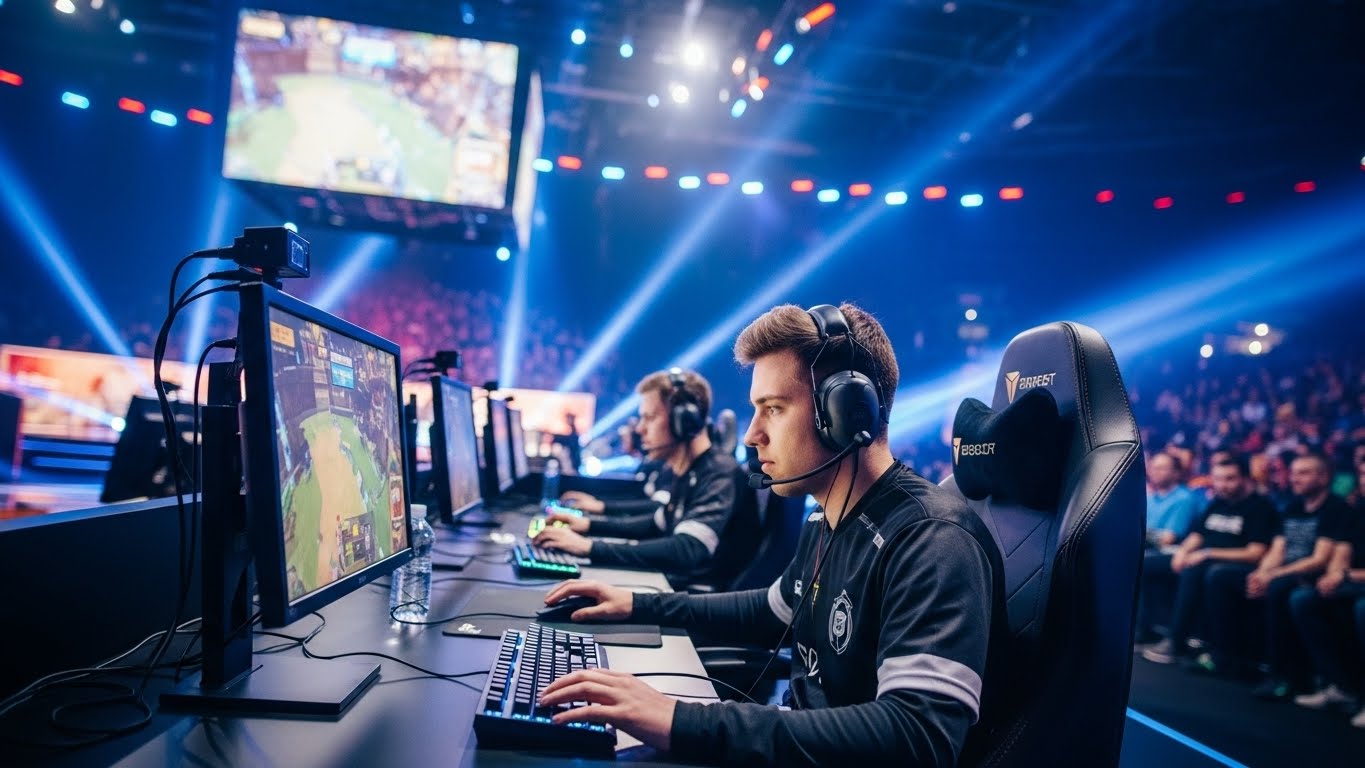
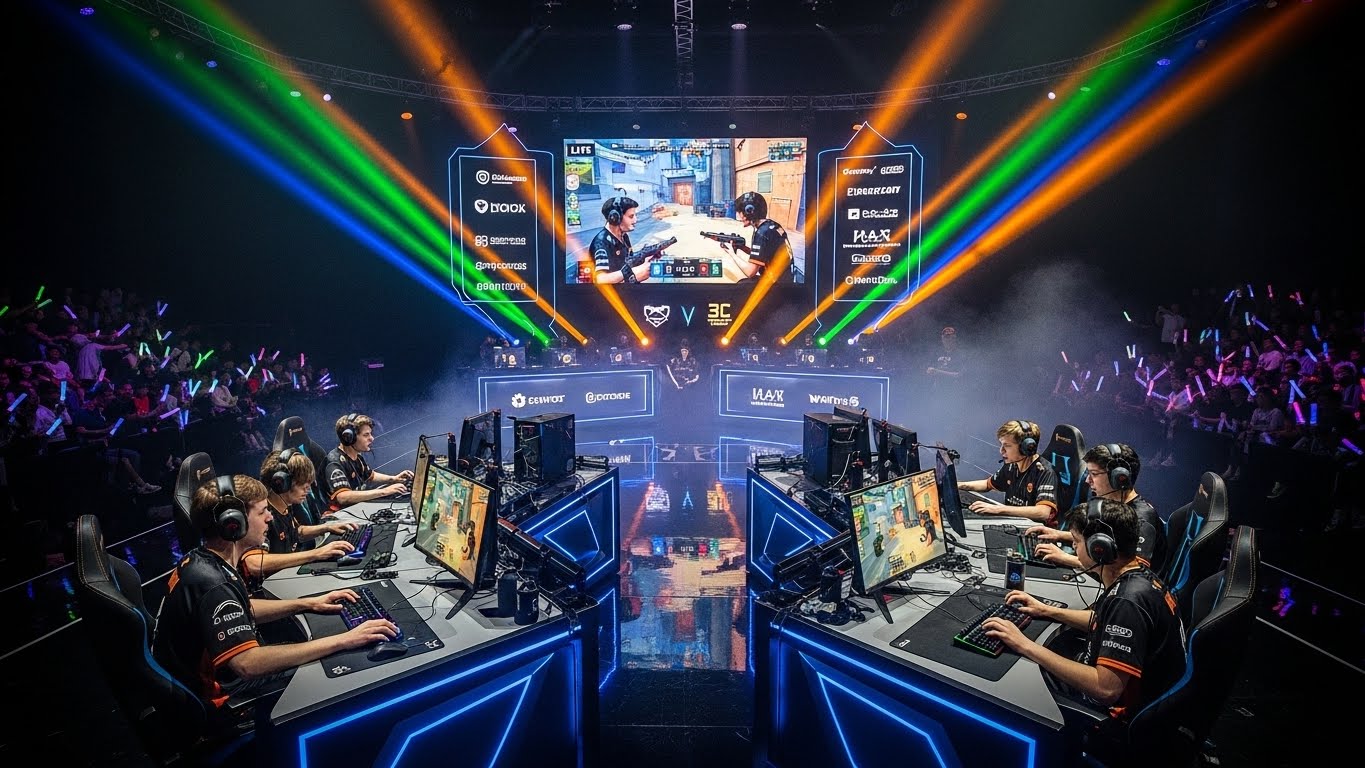
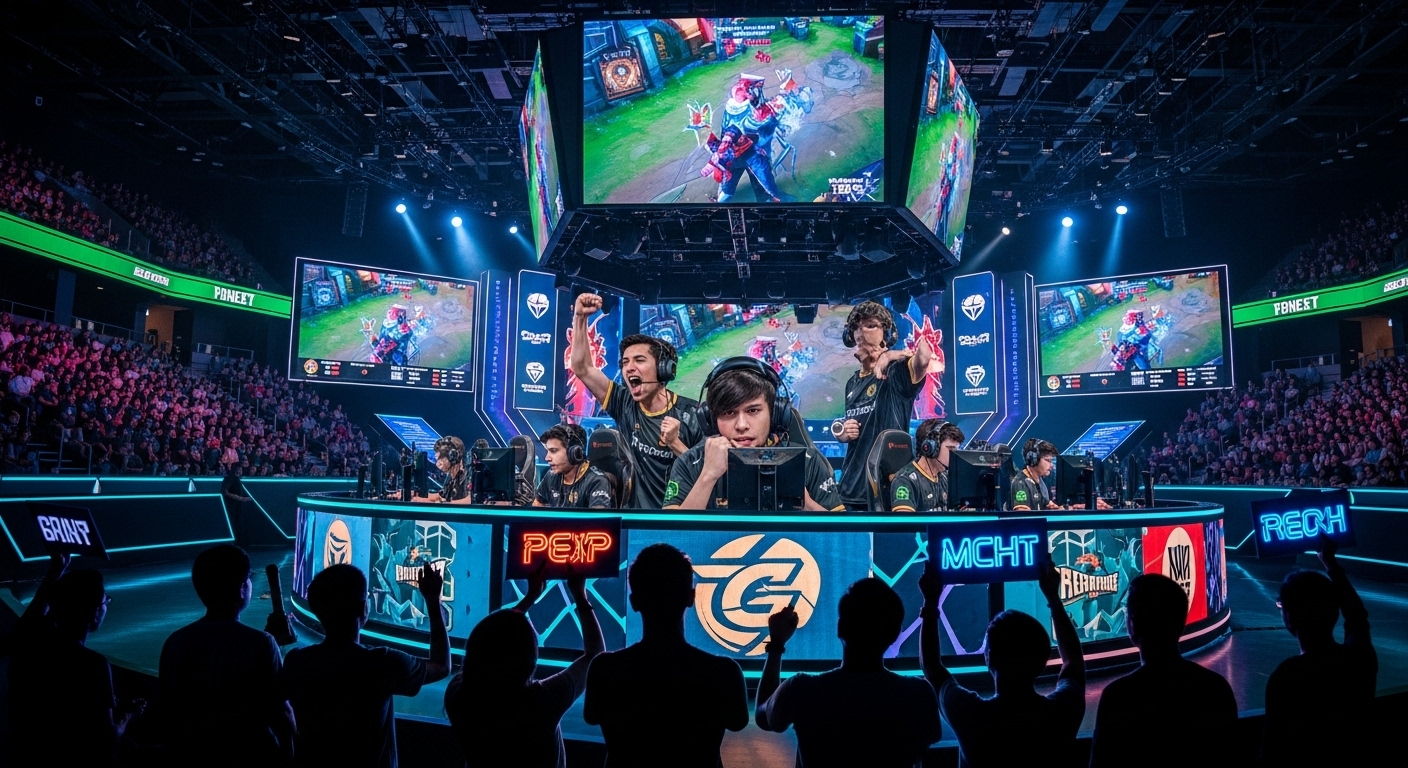
Esports events now take place in massive arenas, from the Staples Center in Los Angeles to the Bird’s Nest Stadium in Beijing. These events attract tens of thousands of live spectators and millions more online. The scale and spectacle rival that of any major sporting championship.
The Economics of Esports
The financial ecosystem surrounding Esports is complex and ever-expanding. Revenue streams include sponsorships, media rights, advertising, ticket sales, and in-game purchases. Global Esports revenue surpassed 1 billion dollars in the early 2020s and continues to grow at an impressive rate.
Brands ranging from energy drinks to automobile companies and tech giants now invest in Esports sponsorships. The demographic appeal of Esports—young, tech-savvy, and globally connected—makes it particularly attractive for marketers.
Prize pools have also skyrocketed. Top-tier tournaments now offer millions in winnings, and professional players earn salaries, sponsorships, and streaming income. Some of the world’s most successful Esports organizations operate like traditional sports franchises, with dedicated training facilities, coaching staff, nutritionists, and analysts.
The Role of Technology and Innovation
Esports owes much of its success to technological progress. High-speed internet, powerful gaming hardware, and advanced streaming platforms have made global competition seamless. Virtual reality, augmented reality, and artificial intelligence are also beginning to shape the next frontier of gaming.
Cloud gaming and low-latency streaming promise to make Esports more accessible to players who lack high-end hardware. Mobile Esports has emerged as a dominant force, especially in regions like Southeast Asia and India, where games such as PUBG Mobile, Free Fire, and Mobile Legends attract massive audiences.
As technology continues to evolve, Esports will likely integrate more deeply with innovations like 5G connectivity, blockchain-based asset ownership, and AI-powered analytics for training and performance improvement.
Esports as a Career Path
What was once dismissed as a hobby is now a legitimate career path. Professional players, coaches, shoutcasters, analysts, event organizers, and content creators form a vast professional network within the Esports industry.
Players often start young, honing their skills through ranked matchmaking systems and amateur tournaments. Successful competitors can be scouted by professional teams and enter structured leagues where they receive salaries and benefits.
Beyond competition, many individuals pursue careers in Esports media, marketing, production, and game design. Universities across the world now offer Esports scholarships and degree programs focusing on gaming management, broadcasting, and event organization.
The Social and Cultural Impact of Esports
Esports has not only transformed entertainment but also reshaped modern culture. It represents a new form of social connection in an increasingly digital world. Fans gather online to celebrate shared passions, and Esports events create community experiences that rival traditional sports fandom.
The inclusivity of Esports allows players of different genders, backgrounds, and abilities to compete on equal footing. However, the industry still faces challenges regarding representation and diversity, with ongoing efforts to create more inclusive environments.
Esports has also influenced mainstream media, fashion, and music. Collaborations between gaming brands and major artists or clothing lines are now common, reflecting how deeply gaming has penetrated pop culture.
The Intersection of Esports and Traditional Sports
Initially, many traditional sports organizations dismissed Esports as a fad. However, as audiences and revenues grew, attitudes began to shift. Today, major sports franchises, including those from the NBA, NFL, and European football clubs, have invested in Esports teams.
Games such as FIFA, NBA 2K, and Madden NFL blur the lines between sports and gaming, allowing fans to engage with digital representations of their favorite teams. Traditional broadcasters like ESPN and Sky Sports now air Esports tournaments, bringing competitive gaming to mainstream television.
This convergence demonstrates how Esports and traditional sports can coexist and even enhance one another. Both share core principles: competition, strategy, teamwork, and entertainment.
Challenges Facing the Esports Industry
Despite its explosive growth, Esports faces several challenges that could impact its long-term sustainability. One major concern is player burnout. Professional gamers often practice for 10 to 14 hours a day, which can lead to physical and mental health issues.
Another issue is the lack of a unified global governing body. Unlike traditional sports, Esports consists of many different games and organizations, each with its own rules, leagues, and standards. This fragmentation makes regulation, player protection, and consistency difficult to achieve.
Cheating, match-fixing, and doping (using stimulants for focus) have also surfaced as problems in competitive gaming. To maintain credibility, Esports organizations are developing stricter anti-cheat systems and player codes of conduct.
Additionally, maintaining audience engagement can be challenging due to the fast-paced evolution of gaming trends. Unlike football or basketball, where rules and formats remain consistent, Esports titles can lose popularity as new games emerge.
The Future of Esports
The future of Esports looks brighter than ever. With continued investment, technological innovation, and cultural acceptance, the industry is poised for further expansion. Analysts predict that Esports viewership will soon rival that of traditional sports like baseball and basketball.
Virtual and augmented reality may soon bring spectators closer to the action, creating immersive viewing experiences. Educational institutions are embracing Esports, recognizing its value in teaching teamwork, strategic thinking, and digital literacy.
Esports will also continue to merge with entertainment, music, and film, creating hybrid experiences that transcend traditional boundaries. As the next generation grows up with gaming as a central cultural pillar, Esports will become a defining feature of global entertainment.
Conclusion
Esports has come a long way from its humble beginnings in college dorms and arcades. Today, it stands as a symbol of technological progress, creativity, and community. It has redefined what it means to be an athlete, reshaped how entertainment is consumed, and opened new possibilities for careers and cultural expression.
What makes Esports truly remarkable is not just its scale or spectacle, but its inclusivity and accessibility. Anyone with talent, passion, and an internet connection can compete, create, and connect. As we move deeper into the digital age, Esports will continue to evolve—pushing boundaries, uniting people, and shaping the future of competition and entertainment for generations to come.